

Selling on Amazon is no longer just about having a good product. With millions of listings competing for attention, visibility and conversion depend heavily on how well your product page is optimized. For many private label sellers, the challenge isn’t product quality, it’s Amazon SEO, It’s making sure the right customers actually find and understand the product.
This is where Amazon SEO becomes critical. Amazon’s search algorithm decides which products appear when customers type a query. If your listing is not aligned with how buyers search or if it fails to clearly communicate value, your product can easily get buried on page four or five.
Many sellers experience the same frustrating cycle: they drive traffic with ads but struggle with low conversions. Often the issue lies not in advertising but in the listing itself. Poor keyword alignment, confusing descriptions, or weak product messaging can prevent customers from buying even when they reach the page.
A structured approach to Amazon Listing Optimisation solves this problem by combining keyword research, customer-focused copywriting, and strategic formatting. When done correctly, it helps listings rank better in search results while also improving conversion rates, turning casual browsers into confident buyers.
Why Amazon SEO Matters More Than Most Sellers Realize
Unlike traditional search engines, Amazon’s algorithm prioritizes purchase intent. The platform rewards listings that both attract clicks and convert customers.
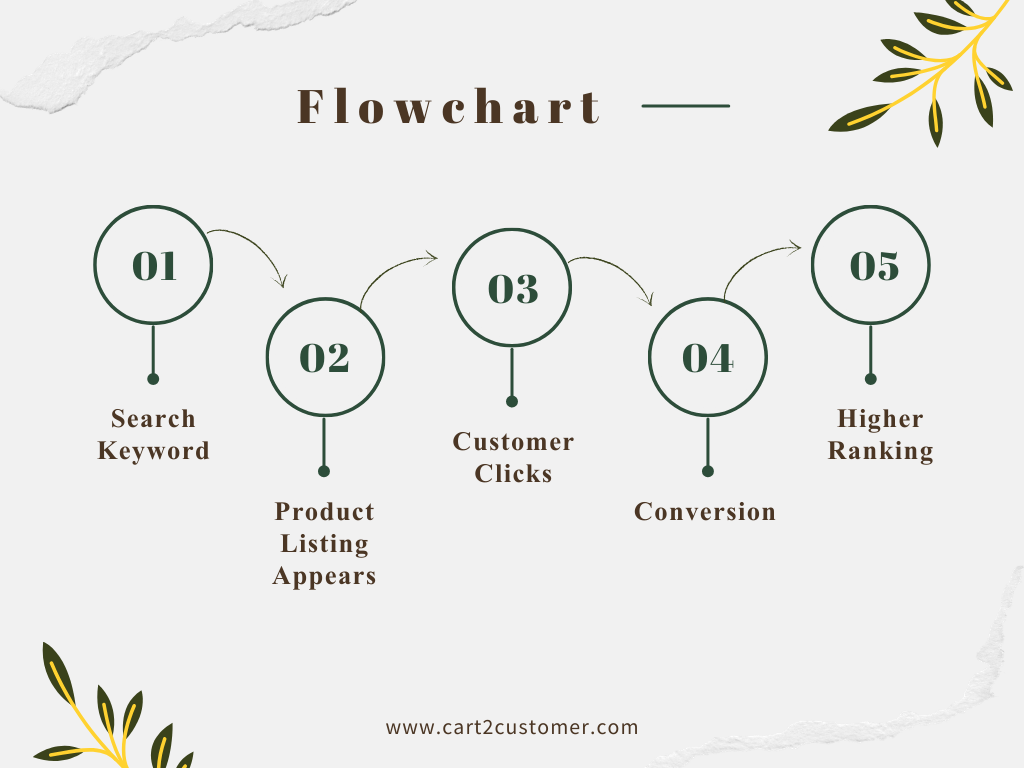
If a product consistently converts well for a keyword, Amazon assumes it is relevant and pushes it higher in search results.
This means your listing must accomplish two things at the same time:
- Help Amazon understand what your product is
- Help customers quickly understand why they should buy it
When either part fails, ranking and conversion suffer.
For example, many sellers add dozens of keywords without understanding how customers actually search. Others focus heavily on keywords but forget to explain the product clearly. Both mistakes weaken listing performance.
Strong Amazon SEO balances search relevance and buyer psychology.
Common Visibility Problems Sellers Face
Many small and mid-sized Amazon sellers encounter the same visibility challenges. Even when they include keywords in their listings, rankings often remain stagnant.
Typical issues include:
Misaligned Keywords
Many sellers rely on guesswork when selecting keywords. They may include high-volume search terms that are not closely aligned with their product.
For example, a seller offering a small backpack might target the broad keyword “backpack” instead of more relevant terms like:
- school backpack for kids, small daypack, lightweight backpack, Backpack for kids 2-3 years Etc.
If the listing does not match the search intent behind the keyword, Amazon will struggle to rank it effectively.
Weak Keyword Distribution
Amazon’s algorithm analyses where keywords appear in the listing. Important areas include:
- Product title
- Bullet points
- Description
- Backend search terms
When keywords are scattered randomly instead of strategically placed, the listing may lose relevance signals.
Poor Competitor Positioning
Sometimes competitors rank higher not because their products are better, but because their listings clearly communicate value.
They may highlight benefits, solve common objections, and structure their information more effectively.
Conversion Problems That Hurt Sales
Ranking alone does not guarantee sales. Many sellers manage to drive traffic to their listings but struggle with low conversion rates.
Common causes include:
Unclear Product Messaging
Customers scan listings quickly. If the benefits are not obvious within seconds, they often leave.
Confusing bullet points, long paragraphs, or technical jargon can make the product harder to understand.
Clear messaging should answer questions like:
- What problem does this product solve?
- Who is it designed for?
- Why is it better than alternatives?
Lack of Trust Signals
Professional-looking listings create confidence. If a product page appears incomplete or poorly structured, buyers may hesitate.
Trust improves when listings include:
- Structured bullet points
- Clear feature-to-benefit explanations
- Organized visual flow through images and content
Mobile Experience Issues
A large portion of Amazon shoppers browse on mobile devices. Listings that appear cluttered or difficult to read on smaller screens can lose potential customers quickly.
Short paragraphs, structured formatting, and visual clarity are essential.
Understanding the Customer Journey on Amazon
One of the biggest mistakes sellers make is treating listing optimization as a purely technical task.
In reality, effective Amazon Listing Optimisation focuses on the customer journey.
This journey usually follows three stages:
1. Search
The customer types a query into Amazon’s search bar.
At this stage, keyword relevance determines whether your product appears in results.
2. Evaluation
The customer opens the listing and scans key elements such as:
- Product title
- Images
- Bullet points
They are quickly deciding whether the product fits their needs.
3. Decision
If the listing answers their doubts and highlights value clearly, the customer proceeds to purchase.
Strong listings guide customers through all three stages smoothly.
Key Elements of Effective Amazon Listing Optimization
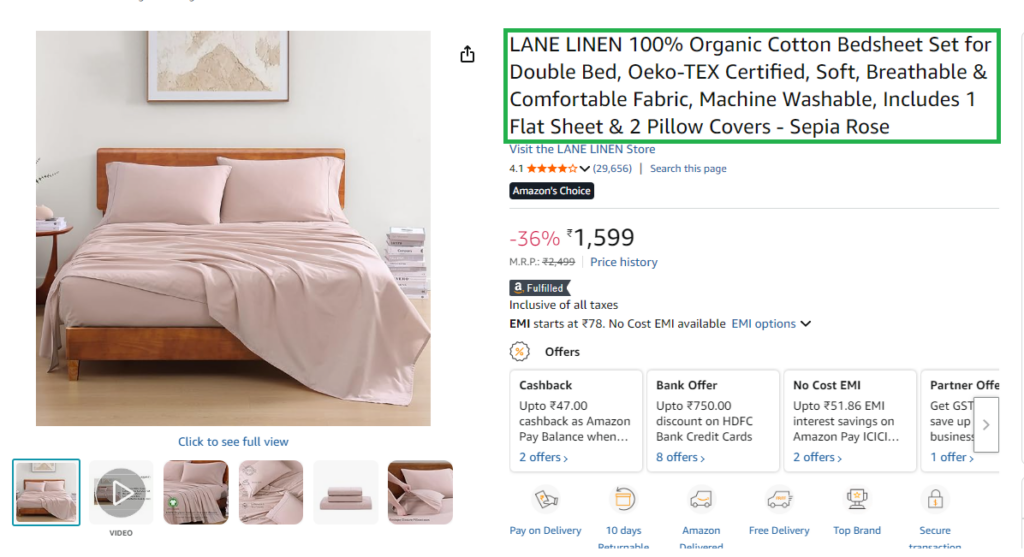
Successful listings combine several strategic elements rather than focusing on just one aspect.
Keyword Research Based on Search Intent
Instead of simply targeting high-volume keywords, sellers should identify how customers actually describe their needs.
This includes:
- Long-tail keywords
- Problem-based search terms
- Category-specific phrases
Mapping these keywords to different parts of the listing helps maximize relevance.
Conversion-Focused Copywriting
Great listings do more than list features, they explain benefits.
For example:
Feature:
Water-resistant fabric
Benefit:
Keeps your belongings safe during unexpected rain while commuting or traveling.
This subtle shift helps customers visualize the product in real-life situations.
Structured Bullet Points
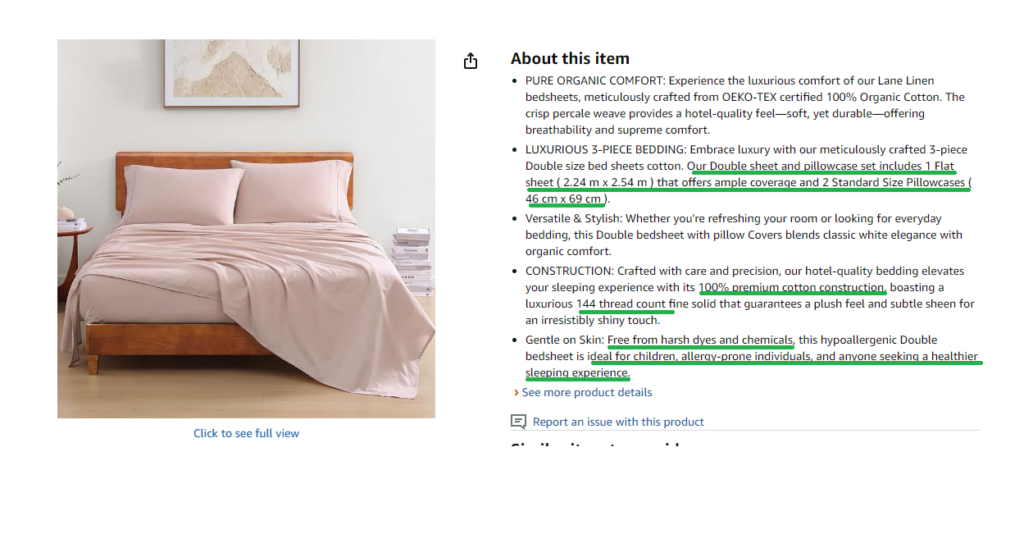
Bullet points should follow a logical structure that improves readability.
A common structure includes:
- Main product benefit
- Key feature explanation
- Practical usage scenario
This approach makes it easier for customers to absorb information quickly.
Strategic Formatting
Formatting plays an important role in improving readability and engagement.
Effective listings typically include:
- Short paragraphs
- Clear bullet structures
- Logical information flow
This ensures customers can understand the product within seconds.
Avoiding Common Amazon SEO Mistakes
Many sellers unintentionally weaken their listings by following outdated advice or random optimization tactics.
Some of the most common mistakes include:
Keyword Stuffing
Overloading titles or descriptions with keywords makes listings harder to read and may reduce conversion.
Amazon prioritizes relevance and sales performance, not keyword density.
Ignoring Customer Feedback
Reviews often contain valuable insights about what customers do or do not understand about a product.
Repeated comments such as:
- “Description not clear”
- “Size smaller than expected”
indicate that the listing may need clarification.
Delaying Listing Improvements
Many sellers postpone listing optimization while focusing on ads or inventory management.
However, poor listings reduce the effectiveness of every other growth effort.
Advertising works best when the product page already converts well.
When Professional Listing Optimization Becomes Valuable
For many growing sellers, listing optimization eventually becomes too complex or time-consuming to manage alone.
Private label founders often handle:
- product sourcing
- inventory planning
- advertising campaigns
- customer support
Spending hours researching keywords and rewriting listings can slow down product launches.
A structured Catalogue & Optimization approach can help streamline this process by combining:
- deep keyword research
- buyer-focused copywriting
- policy-compliant formatting
- conversion-oriented listing structure
The goal is not just to insert keywords but to create product pages that align with both Amazon’s algorithm and customer expectations.
How Better Listings Improve Long-Term Growth
Well-optimized listings influence more than just search rankings.
They contribute to several important business outcomes:
Higher Conversion Rates
Clear messaging and structured information reduce customer confusion, leading to more purchases.
Better Ad Performance
When listings convert well, advertising campaigns become more efficient because each click has a higher chance of turning into a sale.
Improved Organic Visibility
Amazon’s algorithm favors listings that generate consistent sales, gradually improving organic rankings.
Faster Product Launches
A repeatable listing framework makes it easier to launch new SKUs without delays.
Final Thoughts
Success on Amazon depends on more than product quality or advertising budgets. In many cases, the biggest growth opportunity lies in improving the product listing itself.
Effective Amazon SEO ensures your products appear when customers search, while strong Amazon Listing Optimisation ensures those visitors feel confident enough to buy. Together, they create a foundation for sustainable growth.
By focusing on keyword relevance, customer clarity, and structured product messaging, sellers can transform underperforming listings into high-converting product pages.
For brands looking to scale their catalog or launch new products faster, investing in structured listing optimization can significantly improve both visibility and conversion, helping products stand out even in crowded marketplaces.